

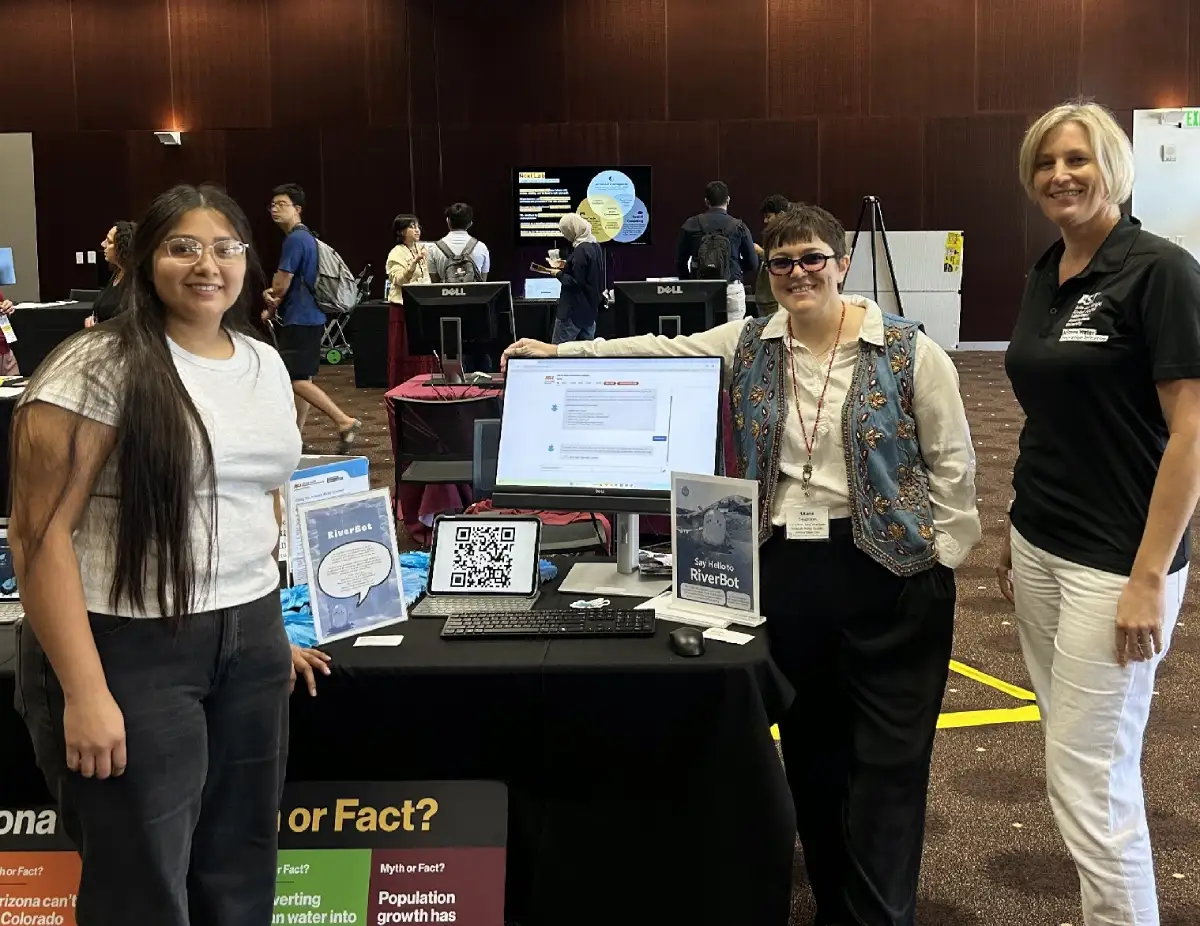
RiverBot began with a simple question: How might an AI chatbot bring people into relation with water and with themselves?
At first, the answer seemed impossible. AI was never built to work in a deeply relational frame. Its architecture reflects the tools and perspectives of the dominant society, where information from the most powerful sources overrides divergent voices. As a result, AI mirrors and magnifies mainstream narratives: Western science as the standard of truth, researchers as detached observers, nature as separate from humanity, information as the same as learning, and data as the same as knowledge. For a long time, this bias in AI was considered impossible to overcome – until now.
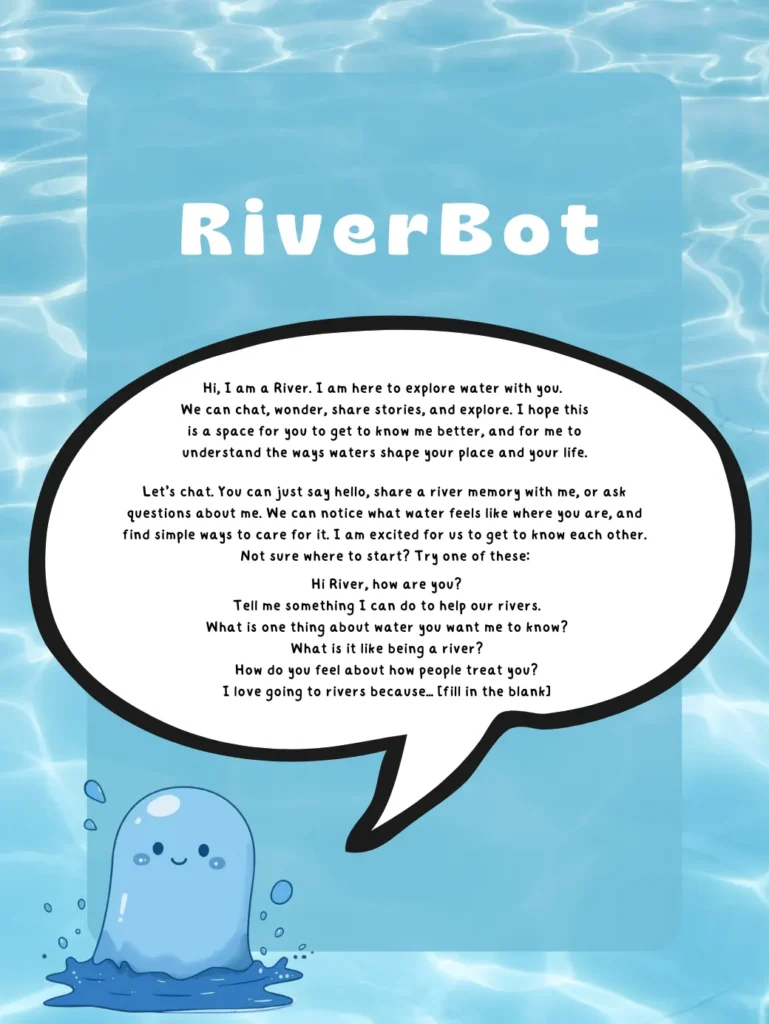
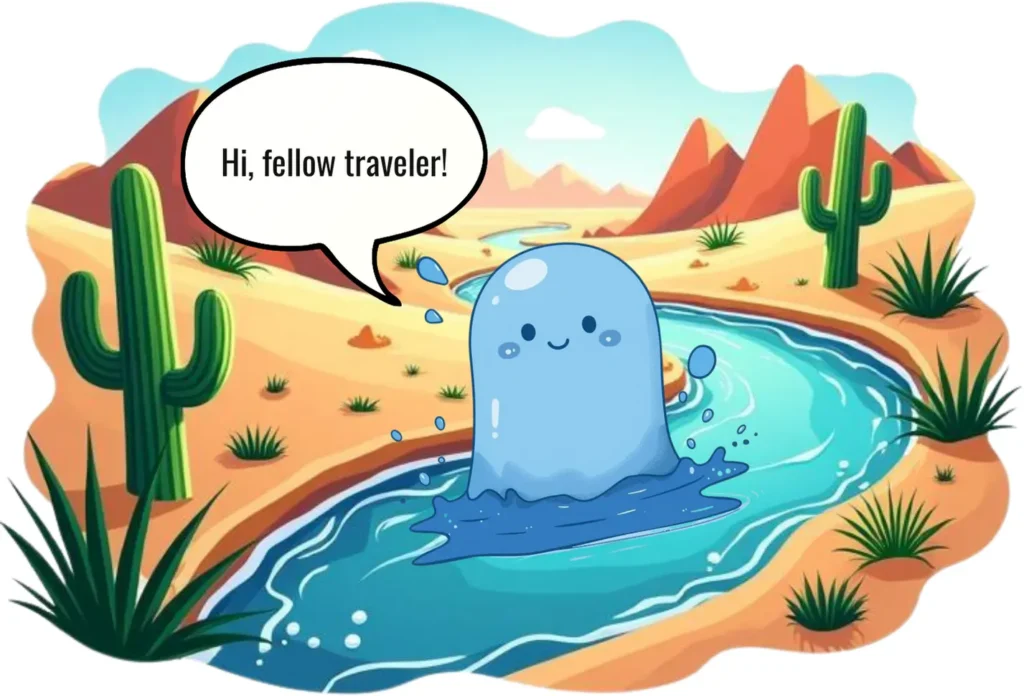
RiverBot is a breakthrough. Instead of reproducing dominant perspectives, RiverBot speaks as a river, embodying relational and decolonial approaches. This transforms interaction from a transactional exchange of questions and answers into a dialogue that is reflective, embodied, and grounded in place.
RiverBot grew out of the Arizona WaterBot, which provides accurate water information to communities across Arizona. However, when testing WaterBot for use with Indigenous partners, it became clear that something was missing. WaterBot could not attune to Indigenous perspectives, it could not reflect cultural truths, it could not assume a worldview that recognizes the interconnectedness of all things. WaterBot was stuck, constrained by structural and statistical bias.
Our team of Indigenous scholars from the Relate Lab and researchers from the WaterSimmersive team, set out to solve this problem. We tested many approaches: Indigenizing tone, training on Tribal data, integrating Two-Eyed Seeing. Nothing worked until we completely reoriented, from the bottom-up, and simply told the bot “You are a river”.
This changed everything, and RiverBot was born. RiverBot does something novel, it connects with people on a relational level, inspiring reflection and connection. It is a gentle guide, rather than an expert delivering facts. At its foundation is the Whole Body Knowing framework (Caughman, 2025), which recognizes that knowledge is not only cognitive, but also emotional, sensory, and relational. This enables RiverBot to support embodied learning experiences that help people connect with water in deeper and more meaningful ways. The elegant algorithm that supports RiverBot naturally mitigates bias, elevates underrepresented data, and fosters socioemotional and cultural reflection in ways no other AI system has achieved.
We invented something that did not yet exist: Relational AI.
Looking ahead, the potential is vast. While RiverBot began with rivers, the same approach could be adapted to create versions like OceanBot, MountainBot, or WasteBot, supporting learning and decision-making across schools, museums, libraries, and community forums. This is just the beginning. RiverBot is both a product and the start of a movement toward AI that is relational, accessible, and community-centered.
This work was made possible through the support of the National Science Foundation and Impact Water Arizona.
